Sleeve Tattoos in Beaumont, TX
Half and full sleeves planned as one composition — designed to flow around a moving arm, built across sessions, complete at every stage.
A sleeve is a composition, not a collection
The difference between a sleeve that looks incredible and one that looks cluttered is almost always planning. A sleeve designed as a single composition has flow: the subjects sit where the arm gives them room, the background carries your eye around the limb, and the whole thing reads as one piece whether your arm is down, raised or bent. A sleeve assembled from unrelated tattoos added over the years rarely gets there, however good the individual pieces were.
So we start with the map. Before any needle touches skin we work out what the sleeve is about, where the anchor pieces sit, how the background connects them, and where it begins and ends. Then we build it in stages — and each stage is designed to look finished on its own, so you’re never walking around with something that looks abandoned.
Styles built for the arm
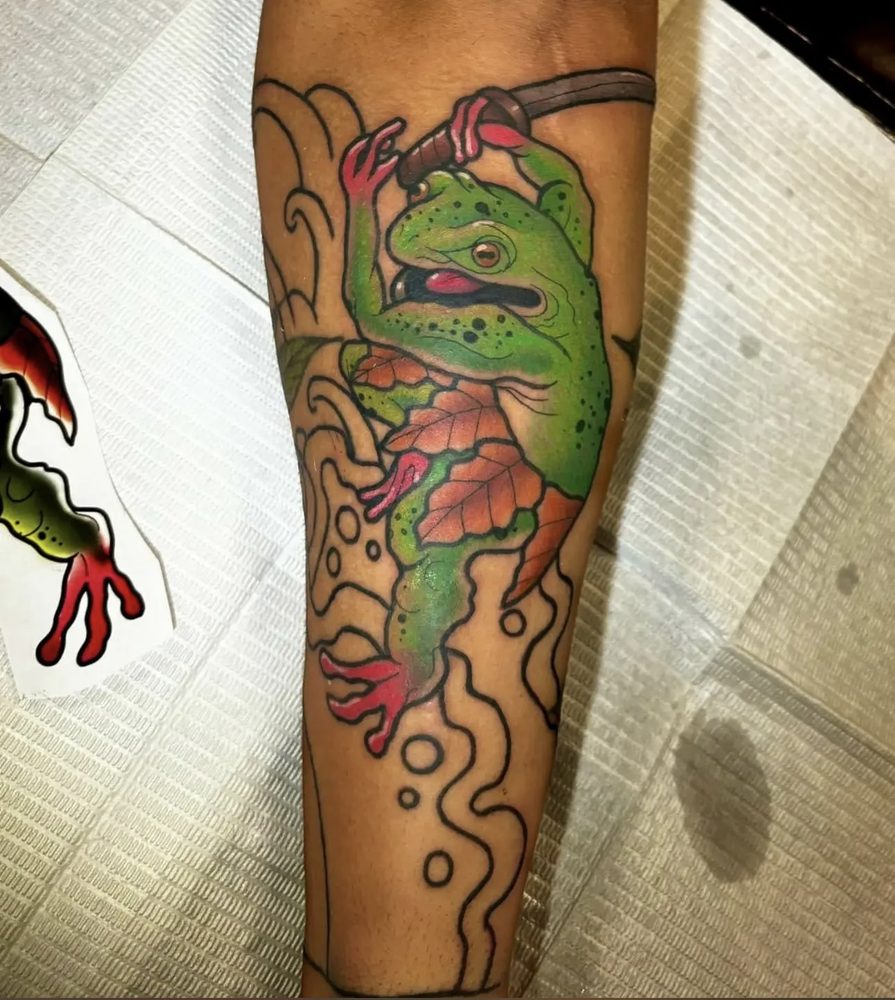
Japanese is the tradition that solved this problem centuries ago. Waves, wind bars and clouds aren’t decoration — they’re the current that carries koi, dragons and peonies around a moving body. If you want a sleeve that flows, this is the deepest well to draw from.
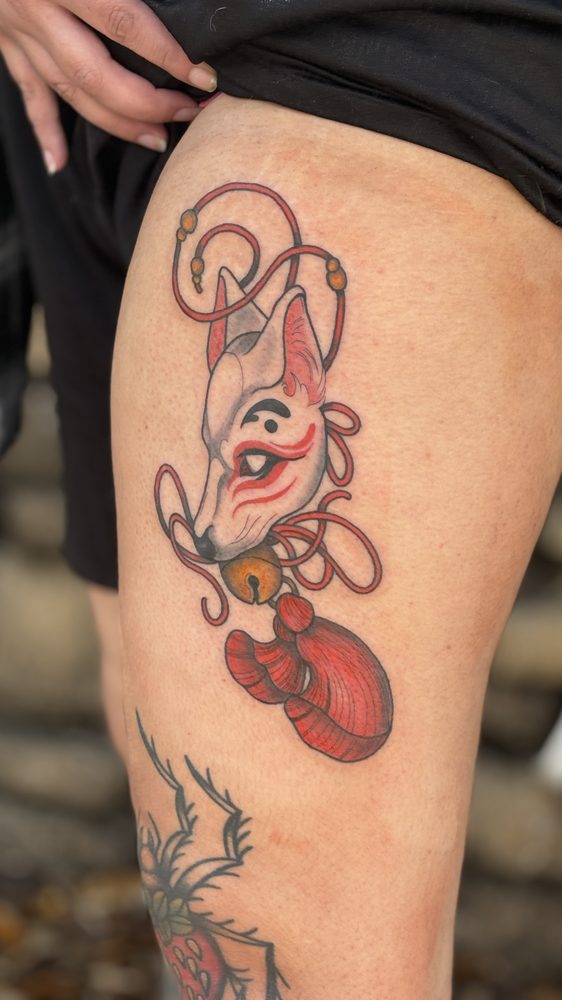
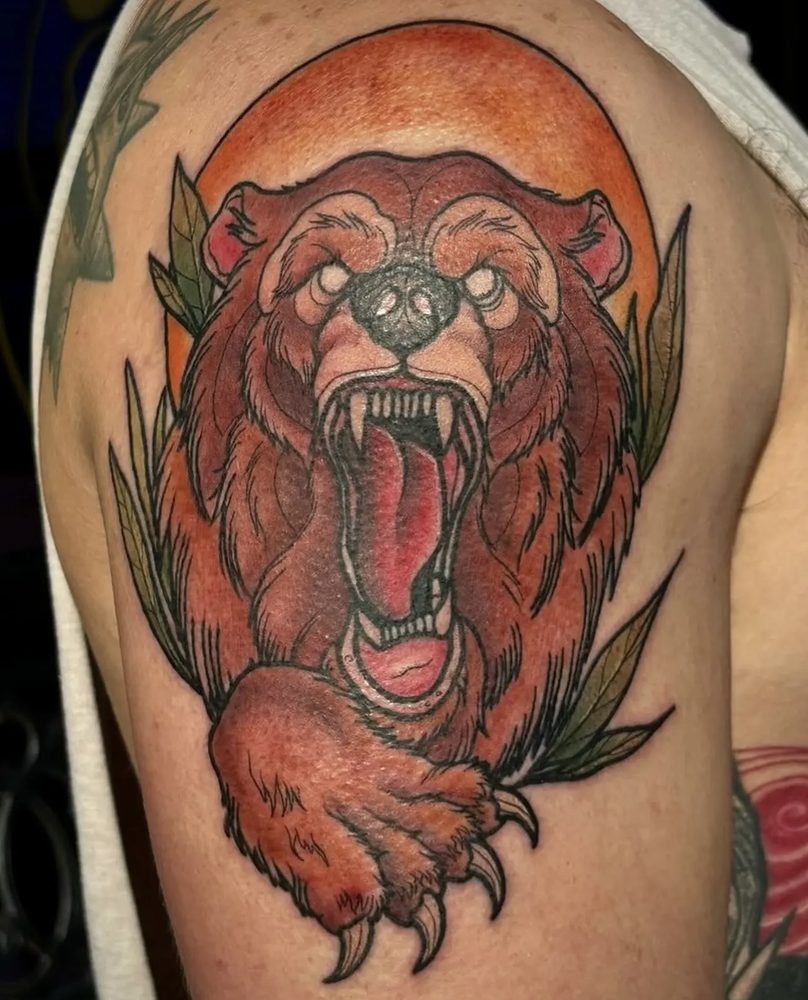
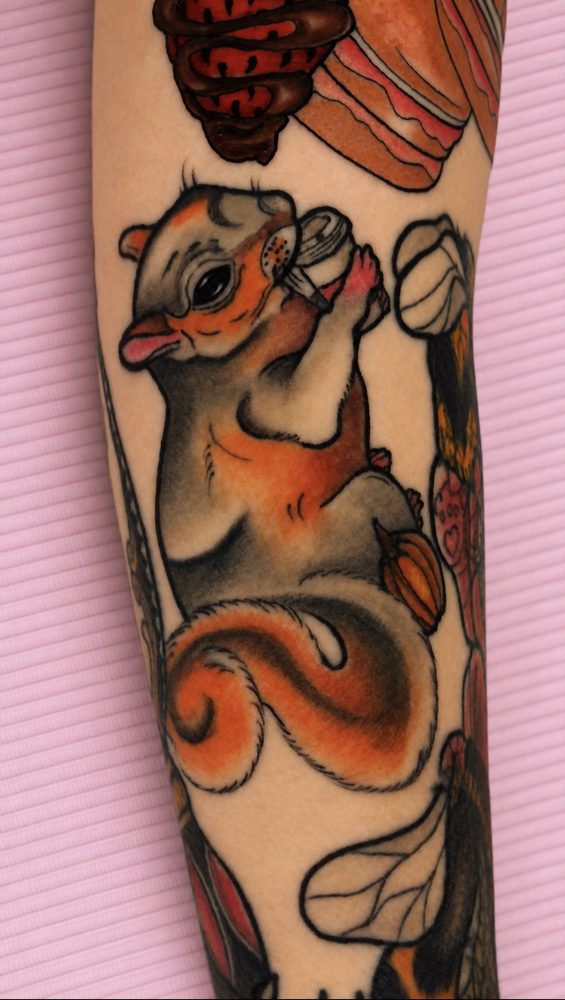
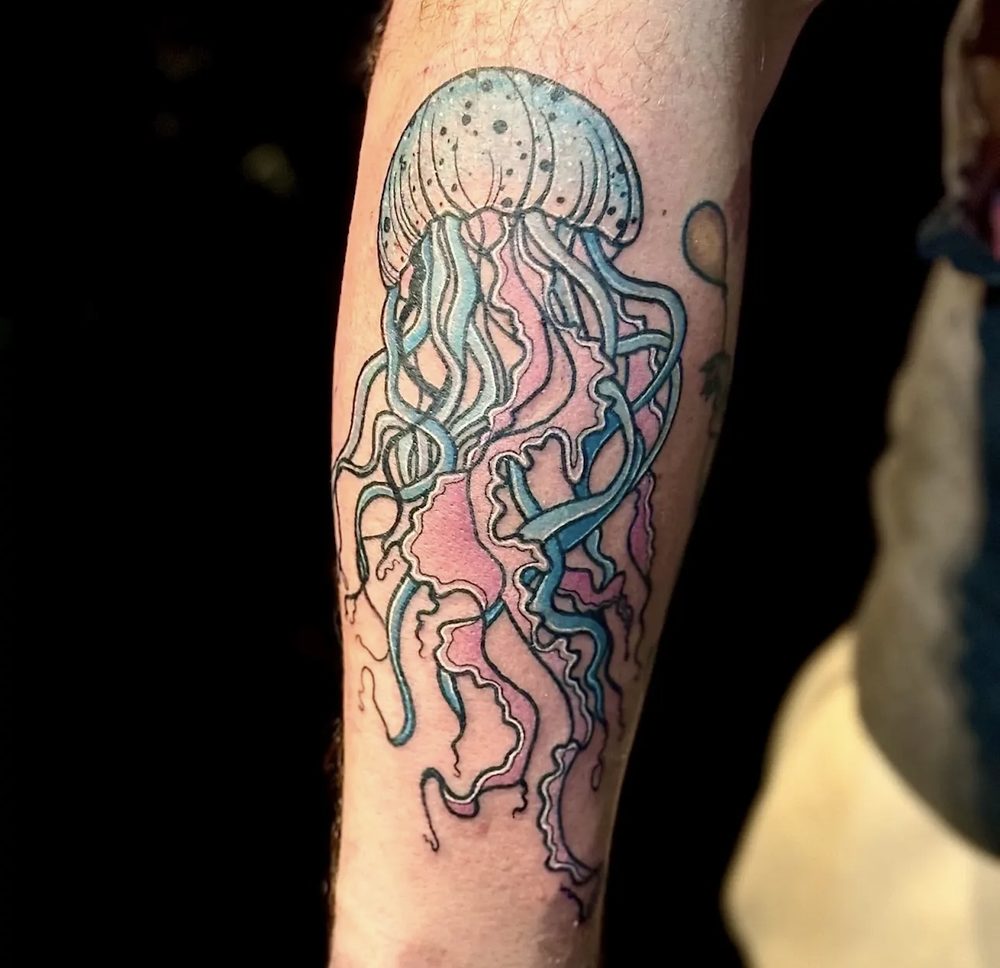
Neo-traditional sleeves work differently and just as well: bold, characterful subjects with strong outlines, linked by background and colour so the whole arm holds together. Both are what I do, and either can be planned at sleeve scale.
How the sessions work
- Consultation and map. Free. We talk through subjects, references and scope, and plan the full composition.
- Outline and anchor pieces. The structural work that everything else hangs off.
- Build out in stages. Each session adds a section, healing properly between sittings.
- Background and unification. The connective work that turns sections into one piece.
Sessions are spaced to let each stage heal — rushing that costs you quality in the finished sleeve. See aftercare for what healing asks of you between sittings.
Working around what you already have
Plenty of sleeves start with tattoos already on the arm. Existing pieces can often be incorporated into the composition, tied in with background, or reworked to sit inside the new design. Sometimes the honest answer is that something needs covering or fading first. Either way you’ll get a straight assessment at the consultation, before you commit to anything.
What moves the price
- Coverage. Half sleeve, three-quarter or full — the biggest single factor.
- Background density. Waves, wind and clouds add richness and time.
- Colour vs. black-and-grey. Full colour builds over additional passes.
- Existing work. Incorporating or covering old tattoos adds planning and time.
A sleeve is priced and paid across sessions rather than as one lump sum — how pricing works.
Large-scale and connected work
Sleeve questions
How long does a sleeve take?
A full sleeve is a project, not an appointment — planned across multiple sessions spaced to let each stage heal properly. The honest answer for your arm depends on the design's density, whether it's colour or black-and-grey, and how long you can comfortably sit. We map the whole thing out at the consultation so you know the shape of the commitment before you start.
Do I have to design the whole sleeve upfront?
It helps enormously, even if we build it in stages. A sleeve planned as one composition from the start flows around the arm properly; a sleeve assembled from unrelated pieces added over years usually reads as a collection of tattoos rather than one piece. We can absolutely stage the work — but let's plan the whole map first.
Can you work around tattoos I already have?
Often, yes. Existing pieces can be incorporated into a larger composition, connected with background, or reworked so they sit inside the new design. Sometimes the honest answer is that a piece needs covering or fading first — I'll tell you which at the consultation.
Do you take a deposit for each session?
Your appointments are held with a deposit and the piece is priced as we work through it, so you're paying in stages rather than facing one enormous bill. The details get set out at your consultation — no surprises mid-project.
What if I can't sit for long sessions?
That's normal and it's fine. Sessions get planned around what you can actually handle — shorter sittings just mean more of them. Pushing through a session you're not coping with produces worse work, so it's counterproductive anyway.
Which styles work best for a sleeve?
Japanese is the tradition built for it — waves, wind and clouds exist precisely to carry a composition around a moving limb. Neo-traditional sleeves work beautifully too, with bold subjects linked by background. Both are what I do.