Cover-Up Tattoos in Beaumont, TX
A tattoo you regret isn't the end of the story. Bold, saturated custom work can turn it into something you're glad to wear.
What a cover-up actually involves
A cover-up isn't paint over a wall. Ink doesn't erase ink — new work sits alongside and on top of what's already in your skin, so the new piece has to be darker, and usually larger, than the old one. That's the whole craft of it: designing something that stands on its own as a good tattoo while doing the quiet structural job of breaking up the shapes underneath so your eye stops finding them.
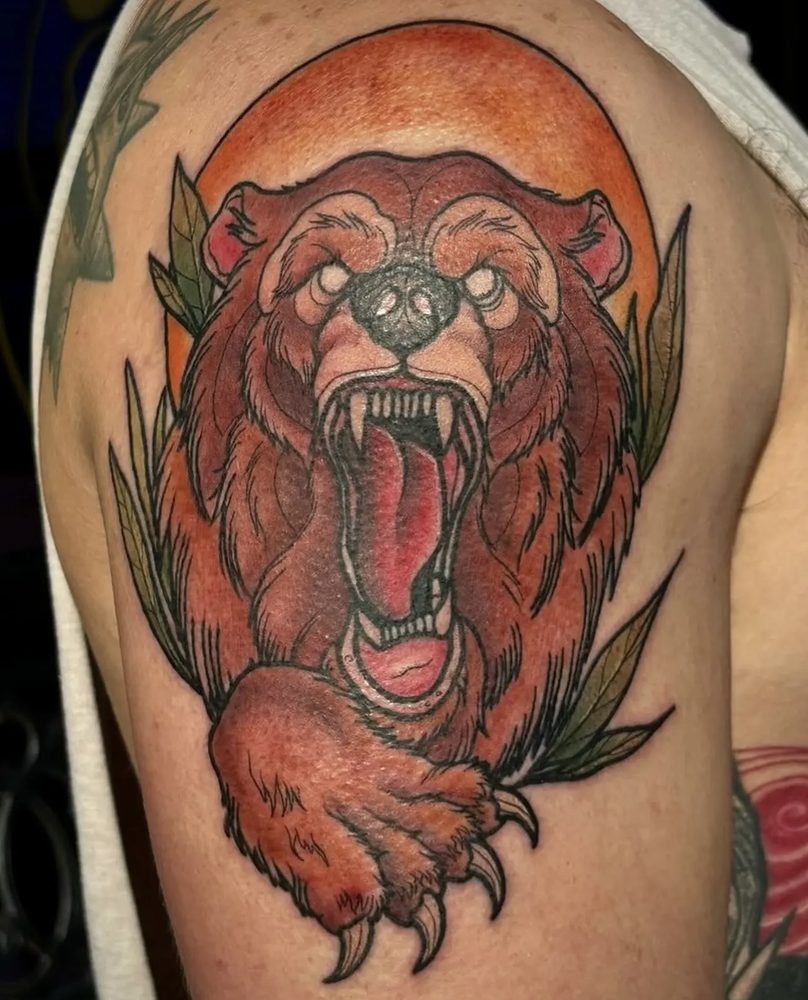
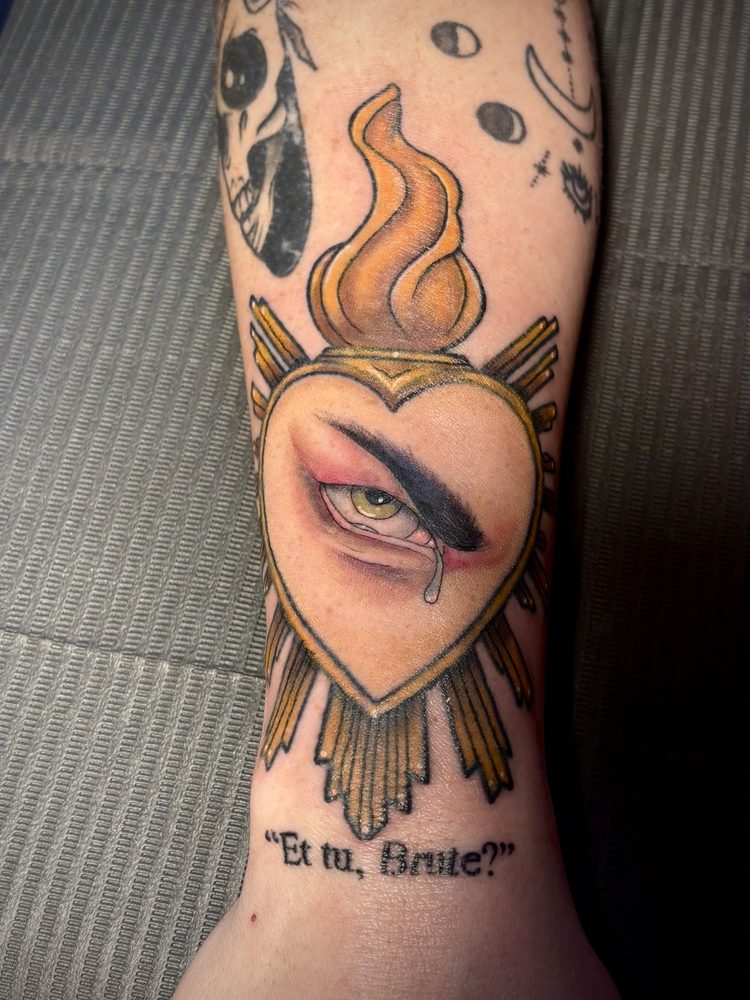
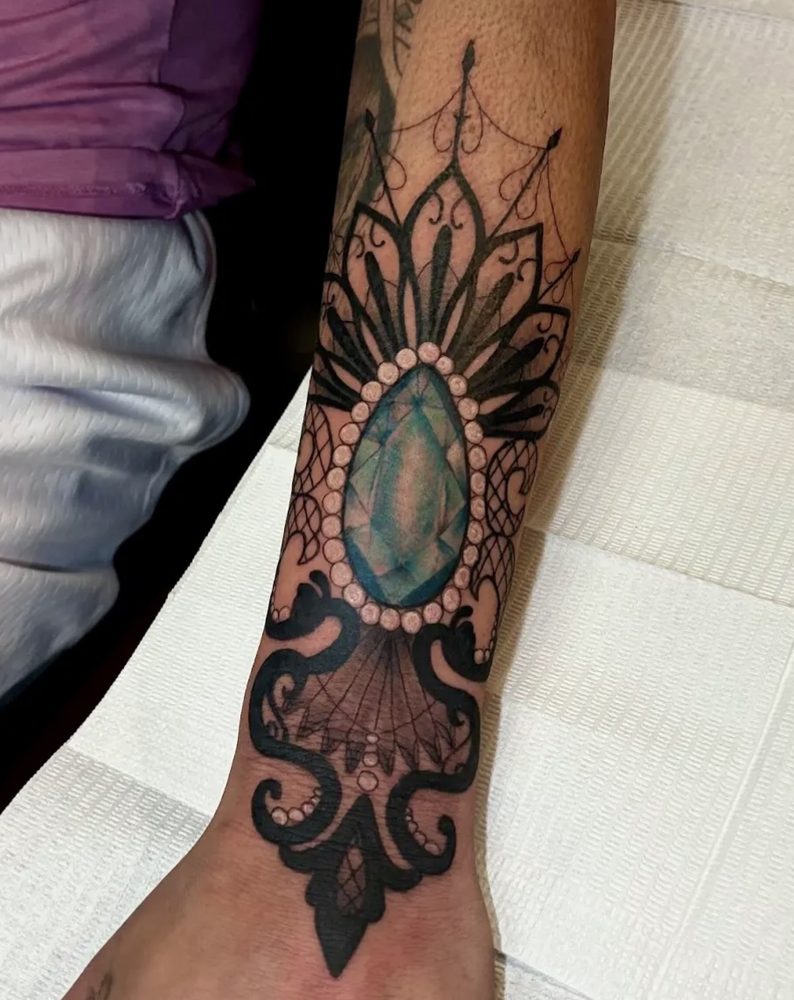
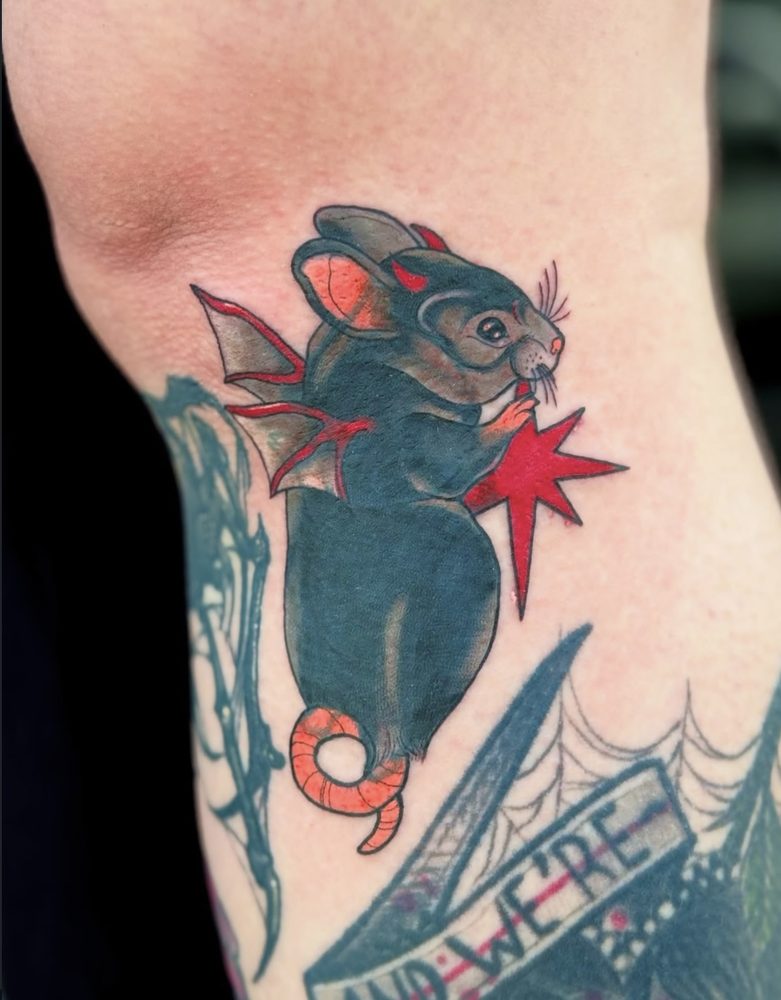
That's why cover-ups suit the way I work. Neo-traditional and Japanese styles are built on heavy outlines, saturated color and deliberate areas of dark — the exact tools a cover-up needs. A design drawn specifically around your old tattoo will always beat one picked off a wall and stretched to fit.
Being honest about what's possible
This is the part a lot of shops skip, and it's the part that matters most. Not every tattoo can be covered the way you're imagining. What decides it:
- How dark and how solid the original is. Faded, fine, or older work gives me a lot of freedom. Heavy solid black is the hardest thing to hide, and sometimes can't be — not honestly.
- How much room we have. A cover-up needs space around the old piece to work with. A tattoo sitting tight against a joint or the edge of a limb limits the design.
- What you want in its place. Soft, light, delicate designs generally can't cover dark work. If your heart is set on something subtle over a heavy old piece, laser fading first is the honest answer.
At your free consultation I'll look at what's there and tell you plainly which of three things you're facing: a straightforward cover-up, a cover-up that will work if we go bigger or bolder than you pictured, or a piece that really wants a few laser fading sessions first. I'd rather send you away with a realistic plan than put work on you that disappoints you in a year.
Rework and reinforcement — the option people forget
Not everything needs covering. Sometimes an older tattoo just needs the linework tightened, the color rebuilt, or new elements grown around it so it reads intentional again. If what's there has good bones, reworking it is often cheaper, faster, and more sentimental than burying it. I'll always tell you if that's the better road.
What moves the price
- What's underneath. Darker, denser originals take more work to neutralise — that's time in the chair.
- Size of the new piece. Cover-ups run larger than the original by necessity, so plan for more than the old tattoo cost.
- Sessions. Bigger cover-ups are built across sittings rather than forced into one.
- Whether laser fading comes first. A separate cost, through a laser provider, but it can open up a much better design.
I don't quote from a photo alone. Bring the tattoo to a free consultation and we'll land on it once I've seen it in person, in real light.
How it works
- Send me a photo. Clear, well-lit, straight on. It tells me a lot before you ever come in.
- Free consultation. I see the piece in person, we talk through what's realistic, and I'm straight with you about the options.
- I draw it around your tattoo. Custom, designed to fit that exact piece — not a stock design stretched over it.
- We tattoo it. One session or several, planned out in advance so you know what you're in for.
Bold work in the styles that cover well
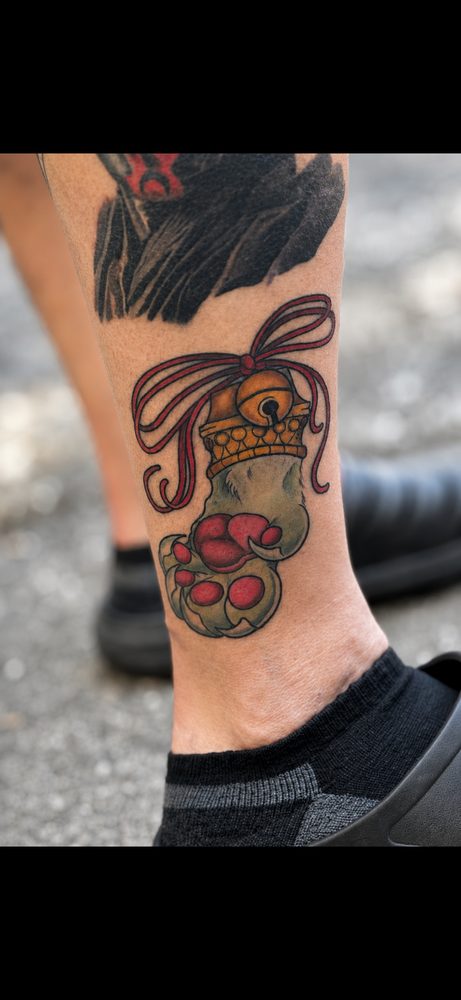
These are recent pieces in the heavy-outline, saturated styles a cover-up is built from — they show the approach, not previous cover-up jobs.
Cover-up questions
Can any tattoo be covered up?
Most can, but not all, and not always the way people picture it. A cover-up has to be darker and usually bigger than what's underneath, so the honest limits are how dark and how heavy the old tattoo is, how much room we have around it, and where it sits on your body. Solid black work and heavy old linework are the hardest. I'll tell you straight at the consultation whether a cover-up will really work, or whether laser fading first would give you a far better result.
Does a cover-up have to be bigger than the old tattoo?
Almost always, yes. New work needs space to break up the old shapes so your eye stops reading them. How much bigger depends on what's underneath — a light, faded piece needs less room than a dark, solid one. We'll figure out the real footprint together before anything is scheduled.
Will the old tattoo still show through?
Done well, a cover-up reads as one new tattoo, not a patch over an old one. In some light, at some angles, you may still catch a hint of what was underneath — especially with very dark originals. I design around that rather than pretending it isn't there, using bold shapes, saturated color and strategic dark areas to carry the eye.
Should I get laser fading first?
Sometimes it's the difference between an okay cover-up and a great one. A few laser sessions to lighten a dark original open up far more design options — softer colors, more negative space, a smaller piece. It costs more time and money up front. I'll tell you honestly if I think your piece needs it.
How many sessions does a cover-up take?
It depends on size and how much needs to be built up over the old work. Some are one longer sitting; larger cover-ups are planned across sessions. We map that out at the consultation so there are no surprises.
What styles work best for cover-ups?
Bold, saturated work with strong shapes — which is exactly what neo-traditional and Japanese styles are built on. Heavy outlines, rich color and deliberate dark areas do the hiding for you. Delicate fine-line work is the one style that generally can't cover anything.