Floral Tattoos in Beaumont, TX
Peonies, blossoms and botanical work — in saturated colour, soft black-and-grey or delicate fine line. Whatever the flower means to you.
Why florals never go out of style
Flowers have been tattooed for as long as tattooing has existed, and they endure for a practical reason as much as a sentimental one: they fit bodies. A flower has natural curve and flow, it can be sized to almost any space, and it works standing alone or woven around something else. Add the fact that most floral tattoos carry a personal story — a birth flower, a grandmother’s favourite bloom, something from a garden that mattered — and you have a subject that’s meaningful and forgiving at the same time.
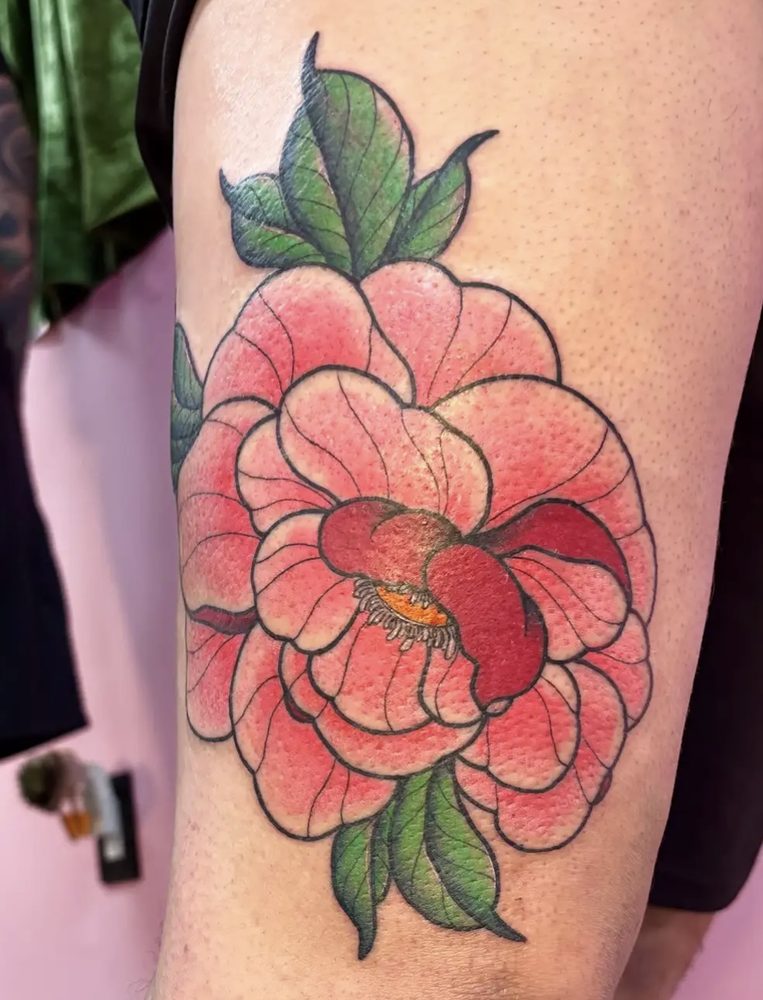
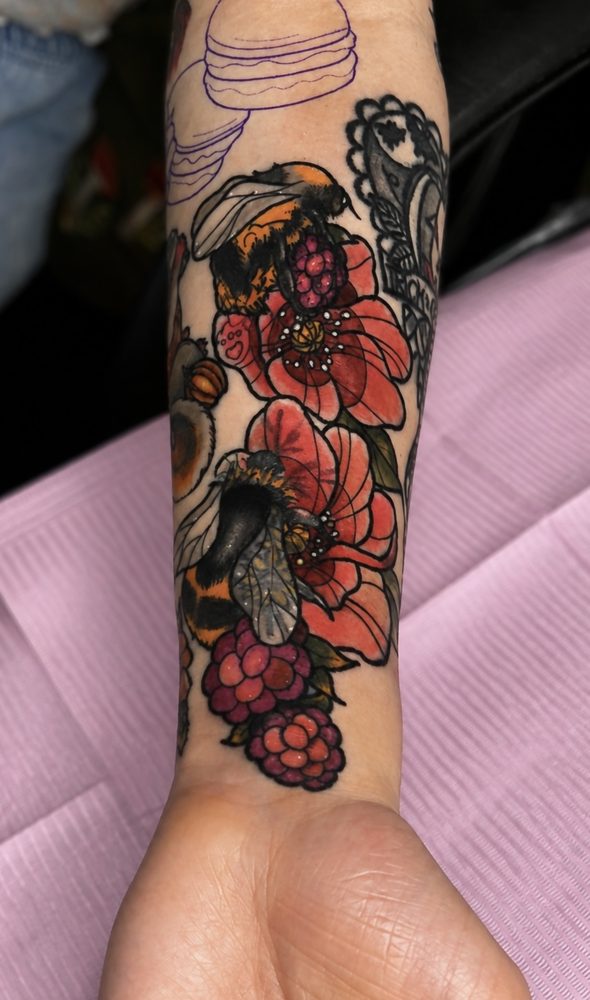
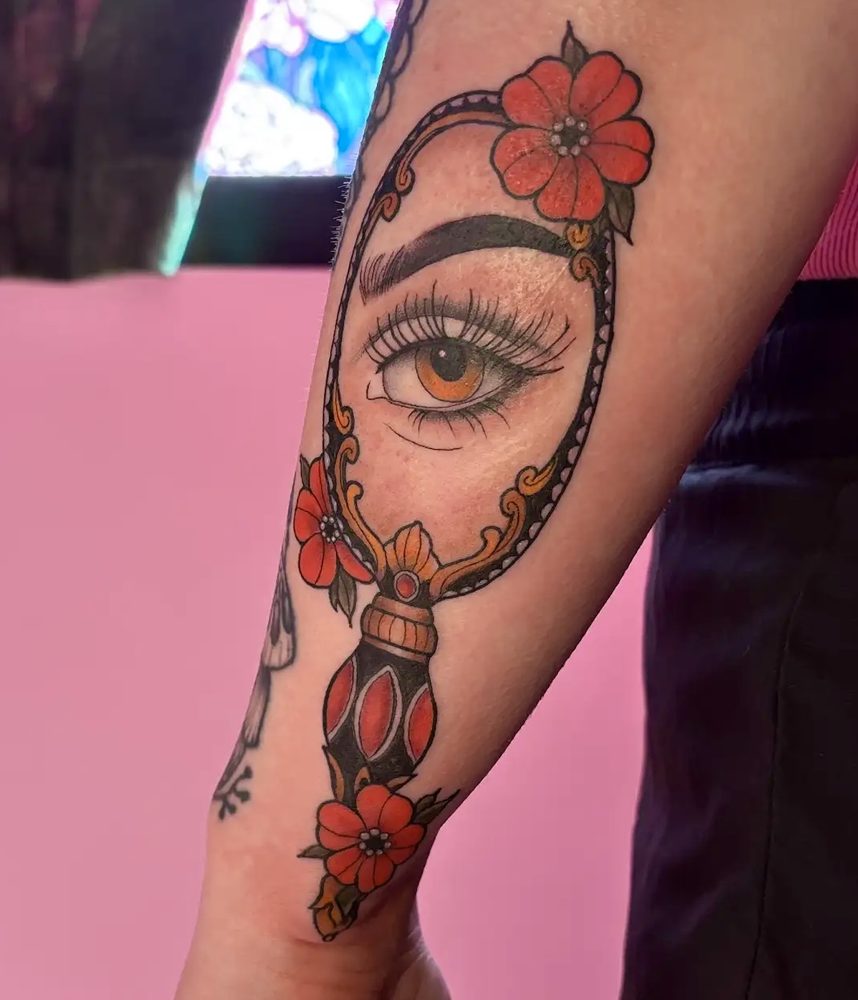
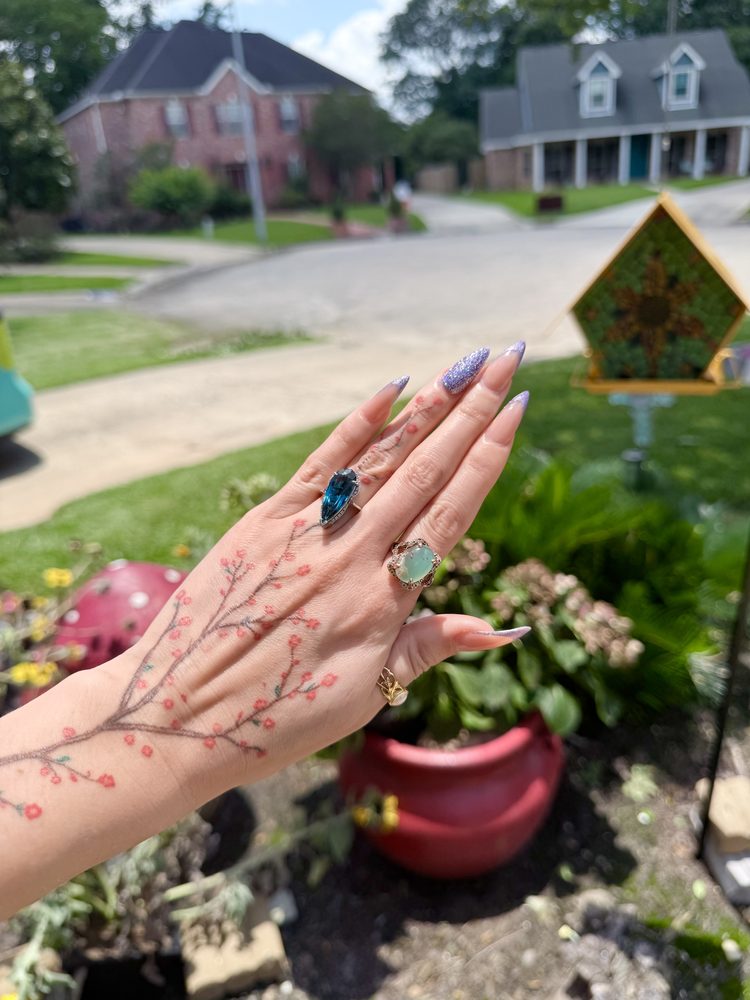
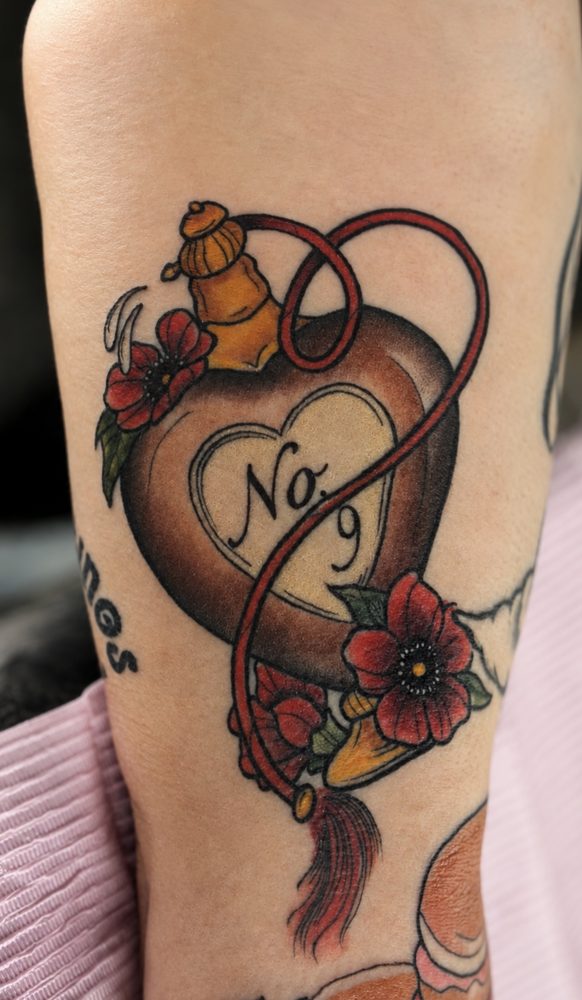
You’ll find florals running through everything I do: the coral Japanese peony, the blossoms trailing across a hand in fine line, the bees among red flowers and raspberries in neo-traditional colour.
Three ways to do a flower
- Neo-traditional colour — bold outlines and saturated petals. The most durable option, and the one that keeps its punch longest.
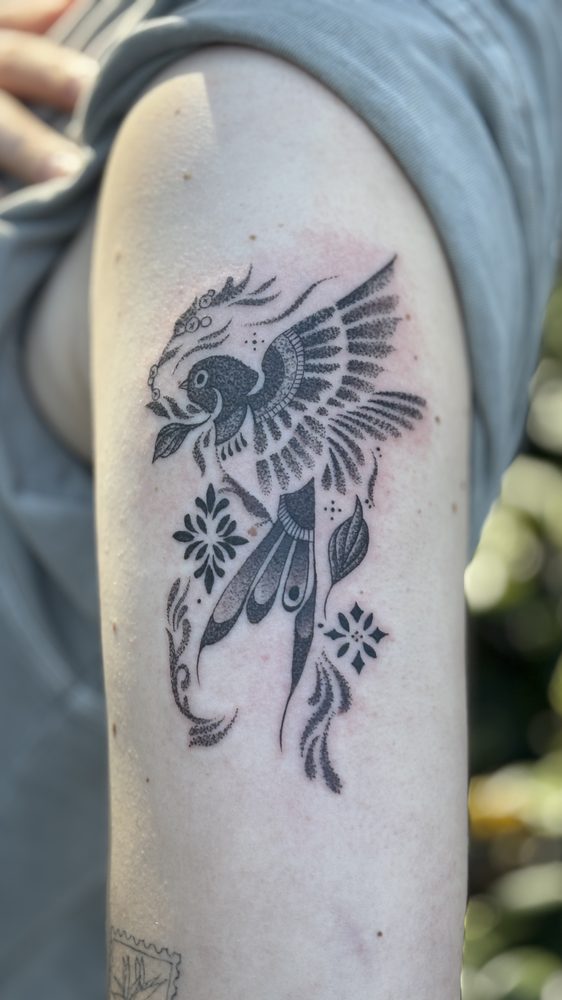
- Black-and-grey and dotwork — a quieter, etched, botanical-illustration feel. Structure carried entirely by tone. See black-and-grey work.
- Fine line — delicate single-needle botanicals. Beautiful, and honest about needing sun protection and possibly a touch-up down the road.
Sizing a flower so it stays a flower
The one honest caution with florals: petal structure is what makes a flower read as a flower, and that structure needs room. Very small, very detailed floral pieces can lose their internal definition as lines soften and spread over the years — what was a layered peony at two inches becomes a dark blob at fifteen years. At the consultation I’ll size the design so it still reads clearly decades out, which sometimes means going a little larger than you first pictured.
Florals as connective work
Florals are among the most useful subjects in tattooing for tying things together. They fill awkward gaps between existing pieces, soften hard edges, and turn a scattered collection into a composition — which makes them a natural building block if you’re working toward a sleeve. They also do quiet, effective work in cover-ups, where layered petals and dark leaf shapes hide a lot.
What moves the price
- Size and number of blooms. A single flower versus a composition of several.
- Colour vs. black-and-grey. Full colour builds over additional passes.
- Detail level. Botanical-illustration precision takes longer than stylised petals.
- Placement. Flowing pieces that wrap a limb take more planning than flat placements.
Exact quote at your free consultation — how pricing works.
Recent floral and botanical work
Floral questions
What flowers work best as tattoos?
Peonies, roses, chrysanthemums and cherry blossom are traditional favourites because they have structure — layered petals that give real depth. But wildflowers, botanical studies and native Texas plants all work beautifully. If a flower means something to you, that matters more than whether it's a classic tattoo subject.
Colour or black-and-grey for florals?
Both are lovely and they say different things. Colour gives you the full range — the coral of a peony, the deep red of a poppy. Black-and-grey and dotwork give florals a quieter, etched, botanical-illustration feel. We'll talk through which suits your idea and your skin at the consultation.
Can you design around a specific flower that means something to me?
That's most of this work — a grandmother's favourite bloom, a birth flower, something from a garden that matters. Bring photos and the story. The meaning usually shapes the design more than the botany does.
How big does a floral piece need to be?
Big enough that the petal structure still reads once it's healed and settled. Tiny, highly detailed florals tend to lose their internal detail over time as lines soften. I'll size it honestly so it still looks like a flower in fifteen years, not a smudge.
Do florals work as fillers around existing tattoos?
Very well — florals are one of the best connective subjects there is. They fill awkward gaps, soften hard edges, and tie separate pieces into one composition. Useful for building toward a sleeve.